Running Update – Loud Shoes Edition

First run in Nike Air Zoom Alphafly NEXT%

New Gear:

About 15 years ago, a friend turned me onto Mizuno running shoes. They are light, relatively inexpensive, and had the support that I needed for my gait an pronation. They are great shoes. I generally love me some Japanese design. Function-wise, Mizuno was no exception. They have been my faithful go-to running shoe ever since then. For some reason, however, they just keep making them uglier and uglier. From a visual design perspective, the only distinction between my most recent pair of Mizunos and a pair of granny-style mall walkers is the fact that the colorway is not white on white. I know that running is not a fashion show, but I’m running the NY Marathon in a few weeks and I want to wear some good looking kicks for the race. I’m not exactly a young buck anymore, but hey man, I’m certainly not a senior citizen yet either. Until then I’m not trying to give off any grandpa vibes with my footwear. After imagining the horror of opening up the NY Times on Nov. 8th and seeing a photo of myself running down 5th Avenue sporting old-guy kicks, I went on a quest for a non-geriatric looking pair of running shoes to race in.

I had heard good things about the brand ON. I think that they are a pretty good looking shoe and decided to try a pair. They had a nice fit for my foot and seemed okay for running…. except for the fact that the sole design is super prone to rock collecting. Given that I have been running on trails or gravel roads 3-4 times per week, they just weren’t practical. When I wore the ONs, I was forced to stop every half mile or so to remove (some quite sizable) stones lodged in the out sole. They are probably fine for city running, but I’m not going to gamble on wearing them for a marathon without having worn them on at least a few long training runs.

Prevailing public opinion (especially of non-runners) seems to be that Nike is the obvious choice in running shoes. I have had a love/hate relationship with Nike runners since my first pair of Air Pegasus that I wore in high school track. There has always been something not quite right about the way they work on my feet. The past couple of years I have picked up a few pairs of Vapormax, but mostly just for looks. I have never actually run in them. They are not comfortable at all on my feet, even just walking around the city. Summer 2020 I picked up a pair of deeply discounted Nike trail runners that I actually think are great. So when I saw the new Nike Air Zoom Alphafly NEXT%, I thought I would give them a shot. The visual design is about as non-octogenarian as it gets. In fact, when I first took them out of the box, I was worried that they might be a little much. After my first run in them, I was hooked. They are insanely comfortable and light. I only wore them for three shortish runs before breaking them out on last week’s 20-miler. Didn’t even get a blister. They are honestly the most comfortable shoe that I have ever worn and they seem to give me a literal bounce in my step. All of that said, there are definitely some drawbacks. First: they are insanely expensive as far as running shoes go (roughly double the price of the Mizunos I was using). Another downside is that they appear to be wearing out much faster than the average running shoe. The front section of the out sole is super soft, almost tacky to the touch. This is awesome for gripping the road, but I’m already seeing significant wear after putting only 50ish miles on them. Based on these facts, I’m not sure that I will be able to justify these as a daily runner. I may have to reserve them for training/racing, only. For now, I will enjoy these kicks to the maximum (as well the fresh still-in-the-box pair that I will race in next month), even if it means my theoretical photo in the Times ends up looking like that middle aged guy who is desperately clinging to youth by wearing loud sneakers! 😉

Good Reads: ‘A Short History of Nearly Everything’ by Bill Bryson

This is another recommendation from my old man. It is actually his copy (complete with hand-marked copy editing, haha). This was my first read by Bryson, and I quite enjoyed it. Brittany has read most of his catalogue, and got so excited when I picked this thing up, that she bought me 4 or 5 other of his books to read. Anyway, the premise of this gem is that Bryson was interested in science, but could never pay attention to the dry text that is so ubiquitous in science writing. So he set out to explain science in a way that is captivating (and even entertaining). In my opinion, he succeeded. It doesn’t hurt matters that he is a pretty funny writer. I definitely recommend this book to fellow nerds.

Good Reads: The Path Between the Seas

I can safely say that David McCullough is one of my favorite authors. McCullough is a guy who was initially recommended several years ago by my dad, who also loves nerdy books about history and engineering. The Path Between the Seas is a book that I have been working on since the summer. I honestly didn’t have much time to read for pleasure this summer because of the amount of renovation work that has consumed the majority of my free time. So, at 600+ pages this one took a few months for me to get through. Admittedly I also thought the book started out a bit slow. But once I got past the story of the failed French attempt to the part where John Stevens took over the canal project, I had trouble putting the book down. The dude was such a badass that in order to avoid freezing to death one night while scouting railroad lines in present day Montana, he spent the entire night pacing back in forth in sub-zero temps after his Native American guide had abandoned him. Afterward, he proceeded on without the guide and finished the job. They don’t make ’em like they used to.

Anyway, I found the engineering aspects of the Panama Canal fascinating. It is pretty incredible what they built with such crude (by present day standards) machinery. I would definitely recommend this one to any of my fellow history nerds.

Good Reads: Phil Knight’s ‘Shoe Dog’

I have been sitting on this one for a long time. “Shoe Dog” by Phil Knight came recommended by several friends back when it was first released. I finally knocked it out on flight last summer, but am barely getting around to posting this eightish months later. As a person who enjoys college sports, running, history and sneakers, this book checked a lot of boxes for me. Before reading this book, I had only known bits and pieces of the Nike story. My knowledge was mostly based around Prefontaine and Bowerman, but I didn’t really know much about Knight. It is a great story, and Knight is a pretty good story teller. I highly recommend checking this one out.

Good Reads: Flea’s ‘Acid for the Children’

I was very exited when I saw that this book was dropping. I saw a review for it in the New York Times (but did not read the review, as not to spoil the book). I did, however, immediately pre-order it on Amazon. I was finally able to read it over Thanksgiving. “Acid for the Children” is a Memoir written by Flea, the bass player for the Red Hot Chili Peppers. After reading Anthony Kiedes’ book earlier this year I was curious to see how the writing style of the two band mates would compare. To avoid badmouthing Kiedes, I’ll just say that I enjoyed Flea’s book much more.

“Acid for the Children,” tells the story of Flea’s childhood, up through the time that the Red Hot Chili Peppers were formed. It starts with his early childhood in Australia, grade school in Rye New York, then adolescence and early adulthood in Los Angeles, CA. Flea breaks up the narrative with reflections upon his past from his current-day self. The story is incredible, but Flea’s prose alone is worth the read. I highly recommend this book.

Good Reads: ‘The Passion Paradox’

This is probably not a book that I would have chosen to read on my own. B reads a ton of these self mastery type of books because of their relevance to her line of work. She recommended it to me because one of the authors was a competitive runner. The crux of this book, “The Passion Paradox,” by Brad Stulberg and Steve Magness, is unpacking what catchphrases like “finding your passion” and “living a balanced life” really mean. Further, the book uses historical real world examples of how applying such ideas in one’s life does not always yield the intended consequences (i.e. long term success, happiness, fulfillment, etc.). I normally find these types of books cheesy and only marginally (if at all) scientific. But I really did enjoy this read, and it caused me to scrutinize some personal traits with a new perspective after having digested the text. Worth checking out, in my opinion.

Good Reads: ‘Team of Rivals’

I have been reading this book on and off for a couple of years. I normally read on the go, and lugging a 700+ pager around with me is not something that I have really done since law school. I finally finished it a couple of weeks ago, and now I’m kind of sad that it’s over. “Team of Rivals” by Doris Kearns Goodwin is an extremely well written (obviously, since she’s got a Pulitzer), chronological account of Lincoln’s life. The focus of the book is on Lincoln’s political career, but it is obvious that his professional demeanor was shaped by certain aspects of Lincoln’s humble upbringing, also covered in this text. Before reading this book, I didn’t know the full extent of Lincoln’s true genius (not in the hyperbole way that people have used to dumb down this word) and strength of character. It is unlikely that the US will ever see another person of Lincoln’s caliber occupying its highest office. I highly recommend this book.

Good Reads: ‘David and Goliath’

B is a big fan of Malcolm Gladwell. This book ‘David and Goliath’ was my first exposure to his work. It is a quick read. I was able to knock it out during a recent flight. Overall, I enjoyed the book. But I had to take it with a grain of salt.

The premise of the book is that the most favored to succeed can actually sometimes be at a disadvantage by conforming too rigidly to the accepted paradigm of “success” in the respective field. To bolster this thesis, Gladwell gives various examples of underdogs leveraging some unique characteristic to dethrone the heavily favored alternative. As an illustration for this phenomenon Gladwell uses an inverted parabola that roughly equates to the economic law of diminishing returns. In layman’s terms, he makes the argument that there can be too much of a good thing (money, intelligence, athletic ability, etc..).

While I found the book entertaining, I don’t necessarily subscribe to the notion that being and underdog can be leveraged advantageously in all instances. I agree that in certain cases that can be true, the same way that there are exceptions to almost every rule. In my opinion there was enough data and analysis that it wasn’t just another “embrace your flaws!” fluff piece. I thought it was worth the read.

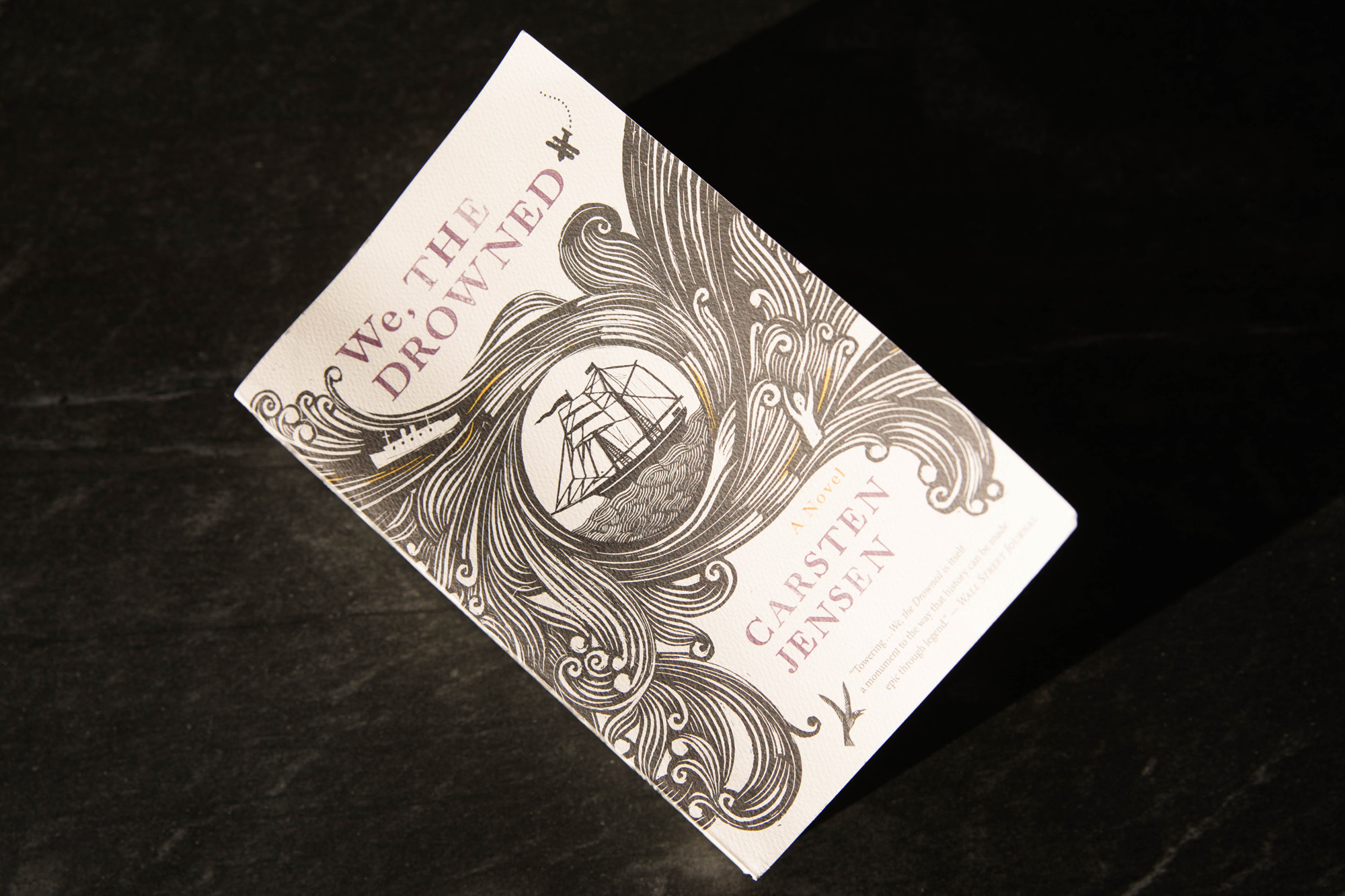
Good Reads: ‘We, The Drowned’

This book was a bit of a deviation from my normal fare, in that, it’s fiction. I have a hard time reading just for entertainment’s sake. I like to be able to take away bit of new practical knowledge from every book I read, even if it is just a story about someone’s life. I was able to justify reading We, the Drowned because, while fiction, it is based on the history of Marstal Denmark from the 1840s through the end of World War II. I’m fascinated by that era generally, and because of my Danish heritage, I’m specifically interested in the history of Denmark during that era. There was added entertainment in the fact that several of the characters in the book bore the same names as my ancestors.

Prior to reading this book, I knew nothing about Marstal. Having now read the book, I actually have a pretty strong desire to visit. It is a small town in the southern part of Denmark, on the island of Ærø. The book is written from third person, but not in an omniscient voice. Instead it is written from the collective voice of the town of Marstal. As the title of the book would suggest, Marstal has a history laden with sailing. Carsten Jensen does an amazing job of telling this story, creating very detailed imagery with the text. This is true to the point that I would not suggest this book for readers who shy away from a bit of gore. It spans over two world wars, and graphically depicts the ugliness that occurs at sea during wartime.

The book was a bit slow to draw me in. But once it did, I did not want it to end. Luckily it is 675 pages, so it lasted me a little while. I would definitely recommend it to anyone who enjoys learning about that span of history, merchant sailing, or just reading a really good story.

Good Reads: Anthony Kiedis’ ‘Scar Tissue’

This was another book that I got in my Christmas stocking. Thanks, B. I had actually asked for this one. One of my colleagues mentioned that his wife was reading it and enjoyed. Since I was a massive RHCP fan growing up, I felt like I needed to get in on this action.

By way of background, I was extremely passionate about music in the early 90s. Listening to and playing music were two of my main hobbies. I won’t say that Red Hot Chili Peppers was my favorite band. But they were definitely in heavy rotation on my CD player. And as a bass player, Flea was definitely my favorite (Les Claypool was a close second). Reading this book was almost enough inspiration for me to break the bass out of storage and give it a slap. Alas, my bass guitar is still collecting dust in the closet.

The book reeled me in right away. I had no idea that AK was from Michigan. Anthony’s way of story telling is very matter of fact and easily conjures visuals, occasionally too vivid. His voice in the beginning of the book is very humble and to the point. I wish that he would have been able to sustain that voice through the entirety of the book. Unfortunately that is not the case. Nonetheless, I did find the story fascinating. I especially loved reading about RHCP’s interactions with other personalities from that era that I was really into, i.e. Kurt Cobain.

Some takeaways from the book:

  1. Anthony Kiedis is an addict
  2. Los Angeles in the 70s and 80s was a free-for-all
  3. Anthony Kiedis is not a musician (at all), despite being in a band
  4. Apparently speedball is like coke, but the high lasts longer
  5. Aside from the drugee lingo, this book may have actually diminished my vocabulary except for the word “accoutrement,” a word that no one actually uses in real life, yet inexplicably appears on multiple occasions in this text
  6. Anthony Kiedis dated Sinead O’Connor, and was dumped by her
  7. AK is still pissed about being dumped by Sinead
  8. Black tar heroin is most easily sourced in Mexico

If you read at my pace it will take multiple sittings to finish (~460 pages). If you read at Angela Libby’s pace, you will finish it in 1.5 hours. If you can look past all of the humble (and not so humble) bragging, the blatant retorts to negative media, etc., there is a lot of wacky entertaining stuff in this text. Overall, I’d say it is worth the read.